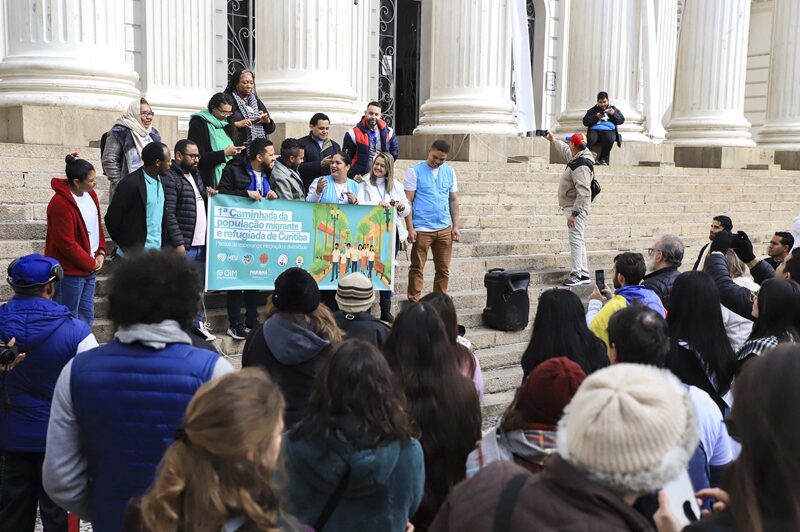
Curitiba is a major destination for migrants and refugees in Brazil, with 65,232 migration records and 8,633 applications for refugee status between 2010 and 2025, the highest figures among municipalities in Paraná, Brazil’s third-largest welcoming state. The population of newcomers is diverse, with Venezuelans, Haitians, Paraguayans, Cubans, and Colombians among the largest groups, alongside growing communities from Lebanon and Bangladesh. Most migrants and refugees arrive through Operation Welcome for Venezuelans, South American mobility agreements, humanitarian pathways, and family reunification, reflecting the predominantly forced nature of migration to the city.
Many migrants, including those with higher education and valuable professional skills, continue to face barriers to formal employment. As of March 2026, more than 10,900 of Curitiba’s 16,076 registered migrant families were living in poverty or on low incomes, while 3,632 had no members in formal employment. This challenge is particularly relevant as Curitiba’s sustainable tourism sector continues to grow, generating increasing demand for workers across hospitality and related services. Curitiba’s project seeks to address this gap by connecting the sector’s growing labor demand with the skills of migrants and refugees as well as marginalized members of the receiving community, while strengthening pathways to formal employment and inclusive economic participation.